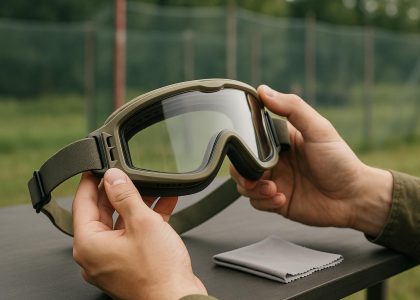

A loose mask, fogged lens or dead battery can turn a planned game into a walk back to the safe zone. The solution is usually not a more elaborate loadout, but equipment that fits, a pre-game check and a clear understanding of the site's rules. Reliable field gear depends on repeatable habits: protect vision first, carry only what you can manage and treat other players fairly.
Start with the fit you can verify
Test fit while moving, not in a mirror. Wear your eye and face protection, shoulder your marker in a safe direction, crouch and turn your head. If anything shifts or a strap needs constant adjustment, the fit is costing attention.
Eye protection should sit securely as designed, leave no obvious gaps that conflict with field requirements and remain comfortable throughout the session. Full-face coverage is commonly required for paintball; airsoft venues may specify approved goggles, masks or complete lower-face protection. The site's current rules take priority over advice from another venue.
Check compatibility before adding equipment. A helmet, mesh cover, prescription insert or communications headset can push eyewear out of position. If a combination creates pressure points, blocks peripheral vision or prevents a proper seal, simplify it. Proper fit is a safety decision, not a cosmetic one.
Treat vision as non-negotiable
Never remove eye protection in an active play area, even if a lens fogs or a strap becomes uncomfortable. Leave through the approved route or call for a marshal according to local procedure. A minor inconvenience is easier to manage than an avoidable eye injury.
Inspect lenses before every session for cracks, deep scratches, clouding and loose components. Scratches can scatter light, making woodland shade or indoor lighting harder to read. Clean lenses using the recommended method; rough fabric, household solvents and improvised polishing can damage coatings. Carry a clean lens cloth and suitable anti-fog solution, but remember that no treatment replaces ventilation and a sound fit.
If you wear prescription glasses, confirm that they work safely with your chosen protection. Do not force ordinary glasses under goggles if they create a gap or make the goggles sit incorrectly. Ask the venue or a qualified eye-care professional about suitable options when the fit is uncertain.
Build a maintenance routine around symptoms
Maintenance works best when it responds to specific signs. A feeder that stops cycling may need cleaning, a connection may be loose or a battery may be unsuitable. A marker that sounds different, leaks, shoots inconsistently or develops a stiff control should be removed from play and checked safely rather than adjusted blindly on the field.
After use, unload equipment as the venue requires, disconnect power where appropriate and wipe away dirt, moisture and paint residue. Store and charge batteries according to the manufacturer's instructions. Do not charge damaged, swollen or unusually hot batteries, and never leave charging equipment unattended. For gas-powered systems, follow the maker's guidance and use only compatible consumables.
Use the manual to determine disassembly limits. Cleaning accessible surfaces and inspecting seals is ordinary care; changing internal components, power settings or safety features can create reliability and safety problems. Unsafe modifications may also breach site rules or local requirements. Use a qualified repair route for faults beyond basic cleaning or inspection rather than experimenting with a loaded or pressurised system.
Pack for the problem, not the image
Build your setup around the conditions you expect. On sites involving long walks, secure closures and comfortable weight matter more than extra pouches. In changeable weather, a dry bag or simple cover may be more useful than another accessory. Gloves should allow you to operate controls without slipping, and footwear should suit the ground and your mobility.
Keep critical items accessible without leaving them loose. Eye protection, water, a small cleaning cloth, basic tools permitted by the venue and a way to identify your equipment are sensible starting points. Check the rules before bringing smoke effects, pyrotechnics, knives, cameras or powered accessories; permission and legal requirements vary by location.
Rehearse at home. Put everything on, walk, kneel, reload only as permitted, remove a layer and stow it again. Fix any strap that catches, pouch that opens or item that is difficult to reach before game day.
Let field rules settle the grey areas
Field rules define eye protection, safe zones, velocity or energy checks, engagement conduct, surrender procedures, equipment limits and responses to a marshal's stop call. Read the venue's current rules and ask questions before entering play. Local laws and regulations may also apply, so consult current official guidance where relevant.
Follow chronograph and inspection instructions exactly. Do not alter equipment to pass a check or argue about a result while holding up the queue. If equipment fails, adjust it only in an approved, safe way, use permitted backup equipment or sit out that game.
A compact pre-game checklist helps:
– Eye and face protection is undamaged, secure and approved for the venue.
– Batteries, gas systems and electrical connections have been checked safely.
– Equipment is unloaded or secured as the site requires before entering the safe area.
– Water, weather layers and permitted essentials are ready.
– The current rules, limits and stop signals are understood.
Make sportsmanship part of the setup
Reliable play depends on trust. Call hits honestly, keep shooting within the site's engagement rules and stop immediately when a marshal or safety call requires it. If you are unsure whether a hit counted, give the other player the benefit of the doubt rather than turning a close moment into an argument.
Do not let equipment problems, poor visibility or a loud exchange become excuses to ignore procedure. Report unsafe conduct calmly to a marshal. Clear communication protects everyone, especially new players learning the signals and boundaries.
At day's end, inspect what failed and what merely annoyed you. Fogging may call for better fit or ventilation; repeated discomfort may mean the item is wrong for you. Make one measured change at a time, keep what works and retire anything that compromises vision, control or safe conduct. That is how a simple setup becomes dependable without becoming needlessly complicated.